
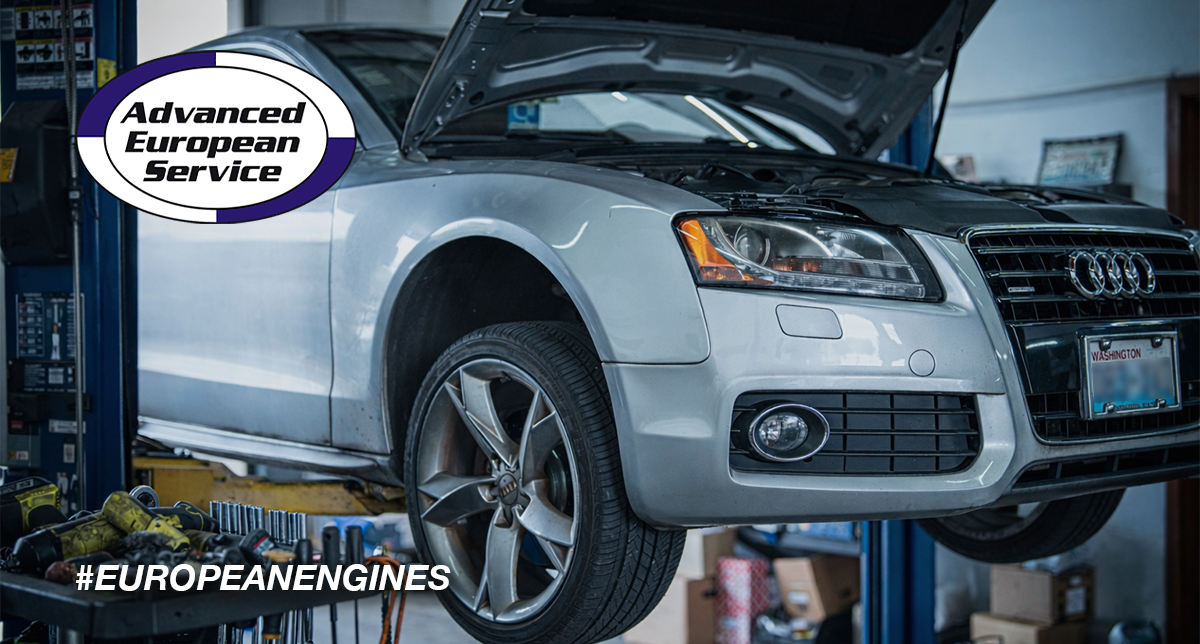
European engines are engineered for performance, efficiency, and longevity — but only when maintained with discipline. When properly cared for, BMW, Audi, Mercedes-Benz, Volkswagen, Jaguar, Volvo, Mini, and Land Rover engines regularly exceed 200,000 miles. When shortcuts are taken, expensive failures arrive far sooner than expected.
At Advanced European Service, long engine life is not luck. It’s the result of consistent maintenance decisions made early and reinforced over time.
Oil Quality and Oil Intervals Decide Everything
Modern European engines operate under high temperatures and tight tolerances. Turbochargers, variable valve timing systems, and high-pressure fuel delivery rely entirely on stable oil quality.
Extended oil change intervals accelerate:
- Timing chain stretch
- Turbo bearing wear
- Sludge formation
- Hydraulic lifter failure
While some manufacturers advertise long service intervals, real-world driving — short trips, traffic, heat cycles — degrades oil much faster.
A conservative oil strategy protects every moving internal component.
Cooling Systems Protect Engine Structure
Overheating doesn’t simply shut a vehicle down — it warps aluminum heads, weakens gaskets, and accelerates internal wear. European cooling systems are efficient but complex, relying on electric water pumps, mapped thermostats, and multi-stage temperature control.
Common failure patterns include:
- Water pump leakage
- Thermostat regulation failure
- Expansion tank cracking
- Hose deterioration
Replacing cooling components proactively prevents catastrophic engine damage.
Ignition Precision Preserves Combustion Health
Spark plugs and ignition coils operate under extreme heat in turbocharged engines. As components age, combustion becomes inconsistent, increasing stress on pistons, valves, and catalytic converters.
Weak ignition causes:
- Misfires under load
- Poor fuel efficiency
- Carbon buildup acceleration
- Turbo overspeed conditions
Replacing ignition components on schedule preserves smooth combustion and protects exhaust systems.
Airflow and Boost Integrity Maintain Efficiency
Unmetered air leaks distort fuel calculations and strain turbochargers. Even small vacuum leaks disrupt idle quality and increase long-term engine stress.
Boost hoses, intercooler seals, and intake couplers must remain airtight to preserve proper load balance.
Diagnostics Prevent Hidden Damage
European vehicles constantly monitor performance data. Early warning signs appear in fuel trim drift, temperature fluctuation, and adaptation changes long before failure occurs.
Proper diagnostics allow intervention before parts fail.
Final Thought
Engines don’t fail suddenly — they fail gradually when maintenance shortcuts accumulate.
Longevity is built one oil change, one coolant service, and one correct repair decision at a time.
At Advanced European Service, extending engine life isn’t a promise — it’s a process.