
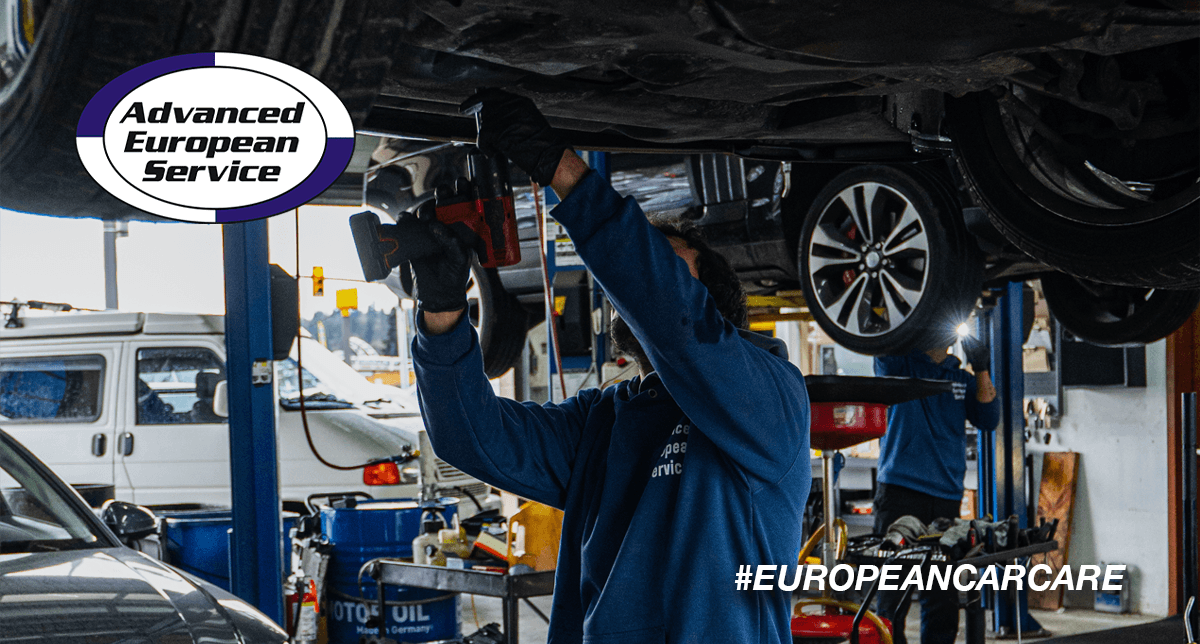
Owning a European vehicle is rarely an impulsive decision. Whether it’s the precision of a BMW, the refinement of a Mercedes-Benz, the confidence of a Volvo, or the unmistakable character of a Mini Cooper, these cars are chosen for how they drive and how they feel. But preserving that experience over the long term requires something most drivers don’t initially think about — a maintenance strategy.
At Advanced European Service, we believe maintenance shouldn’t be reactive. The best ownership experience comes from a long-term plan that anticipates what a vehicle will need before issues arise. Instead of waiting for warning lights or unexpected failures, we help owners build a roadmap that protects reliability, performance, and value.
The process begins with understanding the vehicle itself. Every European brand carries its own maintenance personality. BMW engines demand disciplined oil service. Audi platforms require attention to carbon buildup and turbo health. Mercedes vehicles benefit from careful suspension and cooling system monitoring. Mini Cooper engines, while compact and energetic, are known for very specific service sensitivities.
Because we service European vehicles exclusively, we recognize these patterns quickly. That experience allows us to predict what a vehicle is likely to need not just next month, but over the next several years.
The next step is evaluating the car’s current condition. Mileage tells part of the story, but maintenance history tells the rest. Two vehicles with identical mileage can be in completely different mechanical states depending on how they were maintained previously. Fluid quality, component wear, and diagnostic data all provide clues about the vehicle’s trajectory.
From there, we build a plan.
A long-term maintenance plan isn’t a rigid schedule — it’s a framework. Certain services remain predictable: oil intervals, brake fluid replacement, cooling system inspections, and transmission servicing. Others depend on driving style, climate conditions, and the specific platform.
For example, vehicles driven primarily in stop-and-go traffic experience different stress patterns than those used mainly for highway travel. Short trips place more strain on oil quality and battery life, while long-distance driving can accelerate suspension wear and brake fatigue. By understanding how the vehicle is used, we tailor maintenance recommendations accordingly.
One of the most valuable aspects of a long-term maintenance strategy is cost predictability. When maintenance is planned in stages rather than reacting to emergencies, owners avoid the sudden financial impact of stacked repairs. Smaller preventative services replace larger corrective ones.
It also prevents the domino effect of deferred maintenance. When a cooling system component fails because inspections were skipped, it often triggers secondary damage. A worn suspension bushing left unattended can accelerate tire wear and alter steering geometry. Addressing issues early prevents that chain reaction.
Another advantage of structured planning is confidence. Owners know what to expect, and more importantly, what not to worry about. The vehicle becomes something they can rely on rather than something that occasionally surprises them.
Communication plays a central role in this process. Our team explains what services are coming up, why they matter, and how they fit into the vehicle’s long-term health. Maintenance planning isn’t about selling services — it’s about creating transparency so owners can make informed decisions.
Over time, this relationship becomes collaborative. As vehicles age, priorities evolve. Some owners plan to keep their cars for a decade or longer. Others plan to sell or upgrade within a few years. Maintenance strategies adapt accordingly.
What never changes is the principle behind them: proactive care protects the driving experience.
European vehicles are engineered to deliver years of refined performance when serviced thoughtfully. Without a plan, that experience fades gradually. With a plan, the car continues to feel like the machine it was designed to be.
At Advanced European Service, building a long-term maintenance plan isn’t about preparing for failure. It’s about preserving the reasons owners chose their vehicle in the first place.