
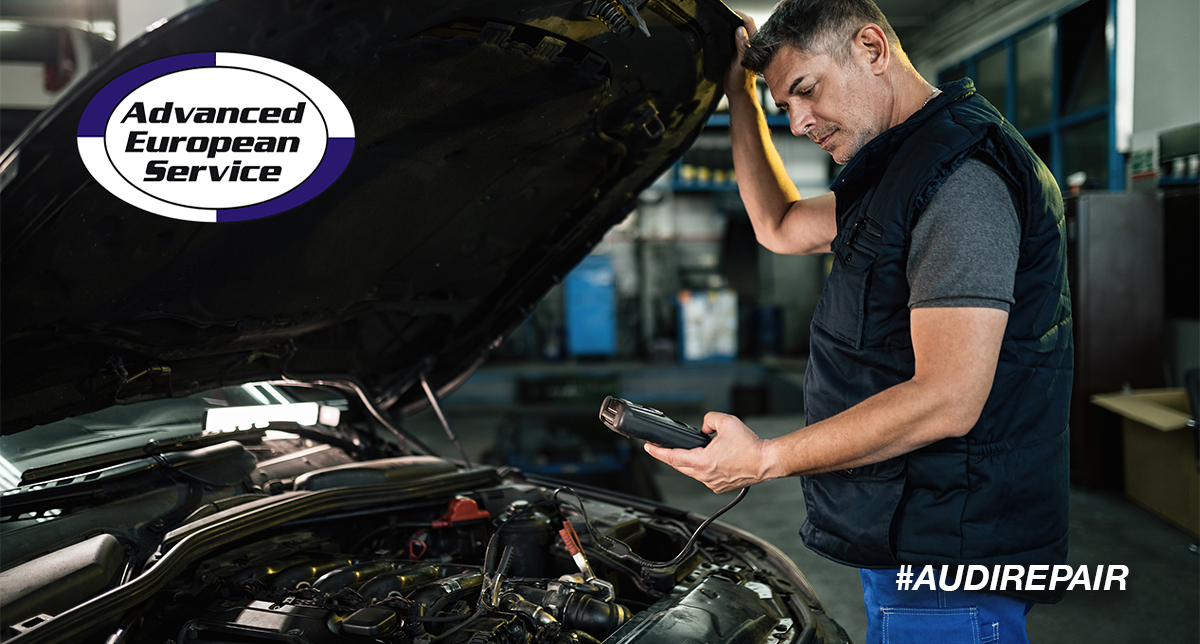
Modern European vehicles don’t fail quietly — they communicate. Every BMW, Audi, Mercedes-Benz, Volkswagen, Jaguar, Volvo, Mini, and Land Rover is equipped with dozens of control modules that constantly monitor engine performance, emissions, transmission behavior, braking systems, and safety functions. When something operates outside its expected range, your car stores a Diagnostic Trouble Code (DTC).
The problem isn’t that owners don’t notice warning lights. The problem is that most people misunderstand what those codes actually mean.
At Advanced European Service, diagnostics isn’t about reading codes — it’s about interpreting the conversation your vehicle is trying to have.
What a Diagnostic Code Really Is
A diagnostic trouble code does not tell you what part to replace. It tells you where the system detected abnormal behavior.
For example:
- A misfire code doesn’t automatically mean a bad spark plug
- A lean condition doesn’t automatically mean a vacuum leak
- A sensor code doesn’t automatically mean the sensor is faulty
European vehicles use cause-and-effect logic, not guesswork. The code is the starting point — not the conclusion.
Why Generic Code Scans Fall Short
Many owners scan their vehicle with a generic tool or parts-store scanner and are given a code description like:
“Cylinder 2 Misfire”
“Oxygen Sensor Fault”
“EVAP System Leak”
What’s missing is context.
European vehicles require brand-specific diagnostic platforms that access:
- Live sensor data
- Freeze-frame conditions
- System adaptations
- Control module communication paths
Without that data, repairs become guesses — and guessing is expensive.
How European Diagnostics Actually Work
At Advanced European Service, diagnostics follow a process:
- Code identification — what system reported the fault
- Operating conditions — when did it happen and under what load
- Live data analysis — is the data logical or contradictory
- Component testing — electrical, mechanical, or pressure testing
- Root cause confirmation — repair what caused the fault, not the symptom
This is how a vehicle goes from “warning light on” to “problem solved” — without repeat visits.
Why Clearing Codes Is Not a Repair
Clearing a code only resets the warning — it does not correct the behavior that caused it.
We regularly see vehicles where:
- Codes were cleared multiple times
- Parts were replaced without testing
- Problems worsened over time
When diagnostics are done correctly, codes don’t return — because the underlying condition was addressed.
Final Thought
Your European car is always talking. Warning lights and diagnostic codes are its language — not an inconvenience.
When interpreted correctly, diagnostics prevent breakdowns, reduce repair costs, and protect long-term reliability.
At Advanced European Service, diagnostics isn’t a scan — it’s a conversation with your vehicle, interpreted by people who understand European engineering.