
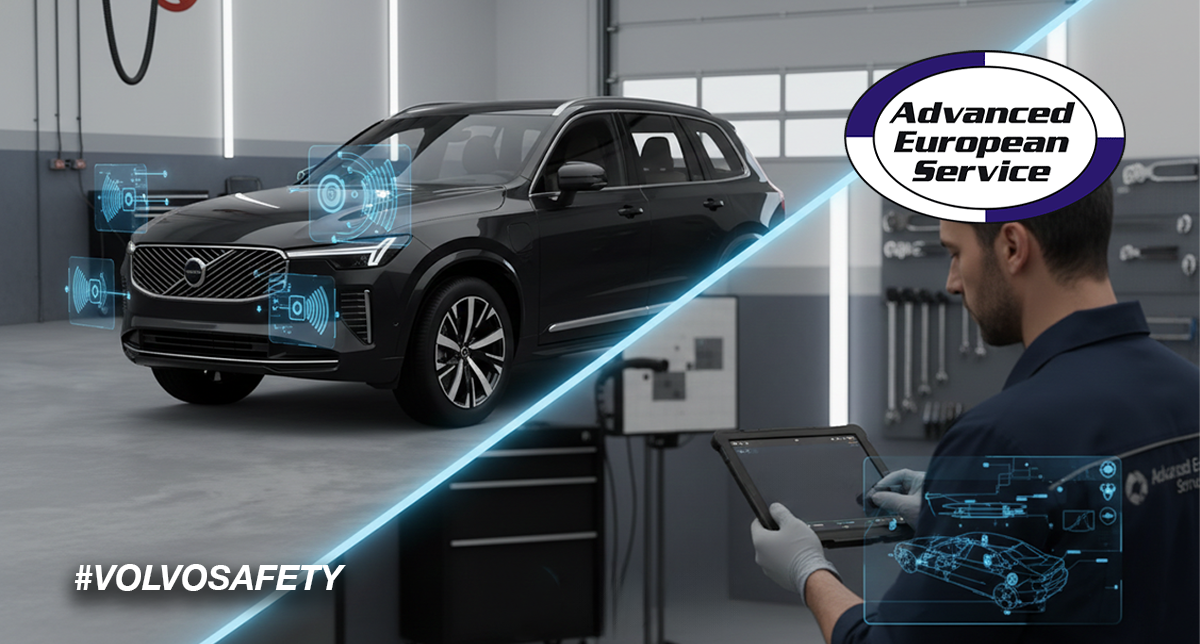
Volvo’s reputation for safety is not marketing — it’s engineering. From advanced driver assistance systems to collision avoidance technologies, Volvo builds vehicles that actively work to protect occupants. But safety systems only function properly when maintained and calibrated correctly.
At Advanced European Service, we treat Volvo safety components as critical operating systems, not optional conveniences.
Sensor Accuracy Is Everything
Modern Volvo safety relies on:
- Radar sensors
- Camera systems
- Wheel speed monitoring
- Steering angle sensors
If any sensor reports inaccurate data, safety features may disable or operate incorrectly.
Calibration After Repairs Is Mandatory
Windshield replacement, suspension work, wheel alignment, or collision repairs often require system recalibration.
Without recalibration:
- Lane assist may drift
- Emergency braking may activate late
- Adaptive cruise may misjudge distance
Calibration restores correct system geometry.
Electrical Health Affects Safety
Weak batteries and voltage fluctuations interfere with module communication, triggering false warnings or system shutdowns.
Battery health is safety health.
Suspension and Braking Integration
Volvo safety systems work in coordination with:
- ABS
- Stability control
- Brake pressure modulation
Worn suspension or braking components compromise safety response.
Software Updates Matter
Volvo frequently improves safety algorithms through software updates. Without updates, systems may underperform relative to current standards.
Final Thought
Safety systems cannot protect if they are misaligned, underpowered, or out of calibration.
Volvo’s safety reputation is earned — but it must be maintained.
At Advanced European Service, safety is not assumed. It is verified.